citinotes
The Art of the Bargain
If you want to discover how life unfolded at the Ottoman court, you will go to Topkapı. If you want to delve into faith and architecture, you will visit the great mosques. But if you want to understand how the city itself lived and breathed under Ottoman rule, you must lose yourself in the Grand Bazaar.
More than a mere market or a repository of precious goods, the Bazaar was the city’s beating heart: the centre from which its commercial, economic and political lifeblood flowed, giving oxygen to the entire city. For more than five centuries, amid its dense web of alleys and beneath the glow of sumptuous carpets, the fabric of a city was woven — the very fabric that made Constantinople, today’s Istanbul, one of the great mirages of the Orient.
The story of the city’s Grand Bazaar — Kapalıçarşı, literally the “Covered Bazaar” — begins soon after the Ottoman conquest of Constantinople in 1453. Sultan Mehmed II sought to repopulate the devastated city and transform it into the economic, as well as the political, capital of his empire.
Around 1460, he ordered the construction of a bedesten: a solid, domed and lockable commercial building designed to safeguard precious merchandise. This became the Cevahir Bedesteni, the “Jewels Bedesten”, and formed the nucleus around which the Grand Bazaar gradually grew. A second covered market, the Sandal Bedesteni, was subsequently built nearby, specialising particularly in textiles. Its name probably derives from sandal, a luxurious fabric woven from silk and cotton.
A bedesten was far more than a simple shopping arcade. Its thick walls, limited entrances and heavily secured construction made it a natural stronghold for the city’s most valuable goods. Precious metals, jewellery, furs and other treasures were stored and traded within its walls, while the Bazaar was also associated with the safekeeping of elements of the state treasury.
The two bedestens formed the secure commercial heart of the Bazaar. Around these monumental halls, shopping streets and workshops gradually took shape. Beyond them rose the hans — buildings arranged around inner courtyards, where merchants could lodge, goods could be stored and artisans could work. What began with two fortified commercial halls thus grew, layer by layer, into an entire urban district devoted to trade: a city within the city.
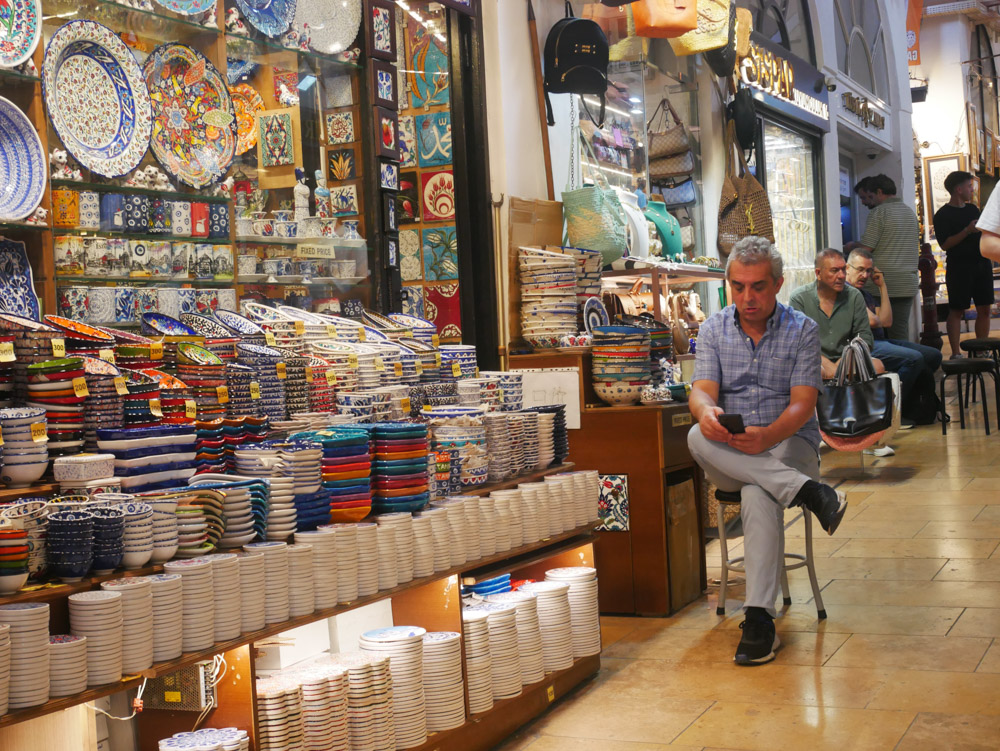
What appears at first to be a chaotic labyrinth was, in fact, a carefully organised space governed by a clear economic logic. Craftsmen and merchants belonging to the same profession tended to cluster along the same street or within the same section: goldsmiths alongside goldsmiths, carpet merchants alongside carpet merchants, while makers of mirrors, slippers, caps, textiles and countless other goods each had their own quarters. Streets naturally came to bear the names of the trades that occupied them.
Far from accidental, this organisation made it easier to regulate quality and prices and kept commerce aligned with the Ottoman guild system. Some of those evocative street names survive to this day, long after the trades that gave birth to them have disappeared.
By the 18th century, the Bazaar had grown to an extraordinary scale, even by the standards of Constantinople. The great Ottoman traveller Evliya Çelebi described a vast world of 64 covered streets, more than 4,000 shops and over 2,000 commercial chambers, alongside hans, fountains, mosques and other institutions. By then, the Grand Bazaar was no longer simply a marketplace. It was a fortified commercial city within the city, with its own streets, rhythms and institutions.
Earthquakes and countless fires repeatedly damaged the Grand Bazaar over the centuries, forcing small and large sections alike to be repaired, rebuilt and sometimes reinvented. Yet none of these natural disasters would prove as transformative as the commercial and technological changes of the 19th century.
With the rise of industrial production, manufactured goods imported from Europe increasingly challenged traditional Ottoman crafts. At the same time, the commercial heart of an increasingly Western-oriented Constantinople began to shift towards Galata and Pera. Greek, Armenian, Jewish and other merchants established businesses in these newer districts, where European residents and visitors increasingly congregated. As commerce followed the city northwards, the old Bazaar gradually lost the central position it had occupied for centuries.
The Grand Bazaar became one of the great subjects of travel writing on Constantinople. Western travellers were endlessly fascinated by its meticulous organisation of trades, the swirl of crowds and colours, the abundance of merchandise and, above all, the almost theatrical ritual of bargaining.
Hans Christian Andersen (1805–1875), the celebrated Danish writer and poet, was one of the great literary figures of the 19th century. A passionate traveller, he also produced a substantial body of travel writing, drawing inspiration from his journeys across Europe and beyond. He visited Constantinople in 1841, during an extensive voyage through Europe and the Orient. His impressions of the city — its bazaars and streets, its peoples, colours and vibrant everyday life — found their way into A Poet’s Bazaar, the major travel book born of this journey.
Xavier Marmier (1808–1892) was a French author, traveller and translator whose work earned him a seat at the prestigious Académie française in 1870. His journeys took him across Scandinavia, Russia, the Middle East and the Americas, introducing French readers to regions that were still distant and unfamiliar. In 1846, he visited Constantinople — the historic name by which Istanbul was widely known until the early 20th century — and was particularly struck by its bazaars. His descriptions of colourful displays, bustling crowds and merchants of different cultures mingling beneath their covered streets offer a vivid portrait of the city’s cosmopolitan character.
The celebrated writer Mark Twain (1835–1910) — the pen name of Samuel Langhorne Clemens — was a keen observer of his own society, but also of the foreign worlds he encountered on his travels. His journeys inspired accounts in which sharp observation was often tinged with irony and satire. Twain’s portrait of the Ottoman capital, which he visited in 1867, is characteristically irreverent, capturing its bazaars, people and unfamiliar customs through the curious — and frequently amused — eyes of an American traveller.
John Dos Passos (1896–1970), an American novelist, journalist and artist, was a major literary voice of the generation shaped by the First World War. A restless traveller from an early age, he transformed his journeys across Europe and the Middle East into vivid works of travel literature. He arrived in Constantinople aboard the Orient Express in the summer of 1921, at a turbulent moment when the city was under Allied occupation and the Greco-Turkish War was still unfolding. His impressions of the city — from Pera and the Golden Horn to its crowded streets and cosmopolitan inhabitants — formed the opening stage of the eastern journey he later recounted in Orient Express.
Henri de Régnier (1864–1936) was a French poet, novelist and man of letters, elected to the Académie française in 1911. Travel nourished his writing, alongside an enduring fascination with places capable of stirring memory and imagination. Régnier was another writer profoundly marked by Constantinople, recalling his 1904 journey as one of his most unforgettable encounters with the East. His impressions of the Ottoman capital are intensely visual and sensory, moving between the Bosphorus, the Golden Horn and the labyrinthine Bedesten with remarkable poetic dexterity.
Nearly six centuries after the first stones of this emblematic market were laid, the Grand Bazaar has lost none of its charm. Some professions may have vanished, yet the names of its streets — recalling fez makers, mirror sellers, furriers, quilt and slipper makers, goldsmiths and countless other craftsmen — still preserve the memory of an Istanbul that has long since disappeared, allowing the old city to linger beneath the footsteps of today’s visitors.
Remember, the Grand Bazaar was once not only the safest place in the city — a stronghold where wealthy Istanbulites entrusted their valuables — but also a great social crossroads, where every stratum of society — merchants, financiers, artisans, servants, travellers and ordinary citizens — met and greeted one another, struck deals, exchanged news and, inevitably, showed off. For centuries, this was not merely where Istanbul traded, but where Istanbul came together.
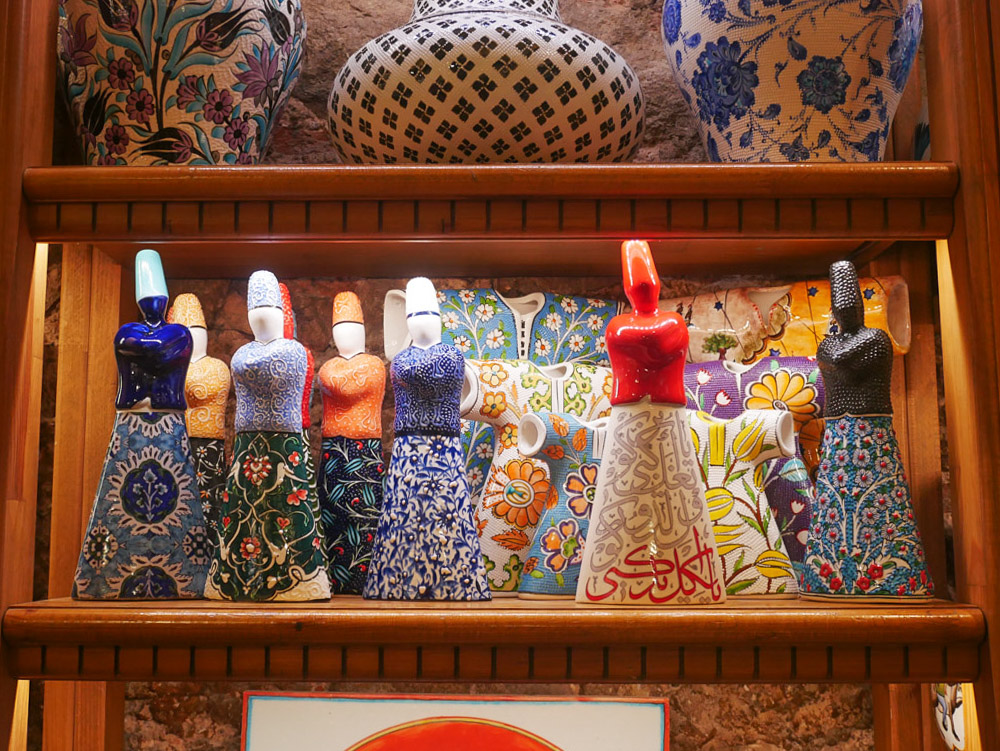
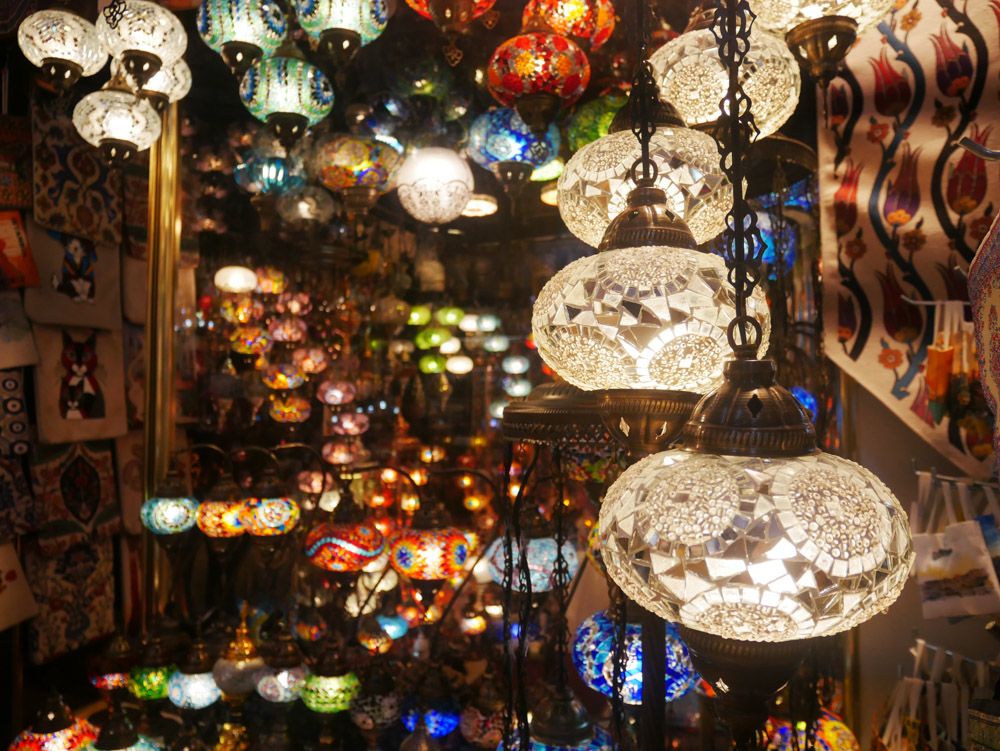
Cross one of its 16 arched gateways and step into this magnificent labyrinth of covered alleys. Let your senses fill with the scents of spices, leather and metal; feast your eyes on vivid colours — dark blues, flashes of turquoise and soft carmines. Run your fingertips over the velvet softness of the carpets, trace the grainy surface of a porcelain dervish, feel the crisp engravings of a copper tray beneath your fingers.
Enter this arena of trade head-on, ready for some serious bargaining. The exercise is almost mandatory if you want to honour the mercantile spirit of the Bazaar and its traders — and a joyful way to leave with a beautiful creation that bears witness to the centuries-old craftsmanship of its artisans.
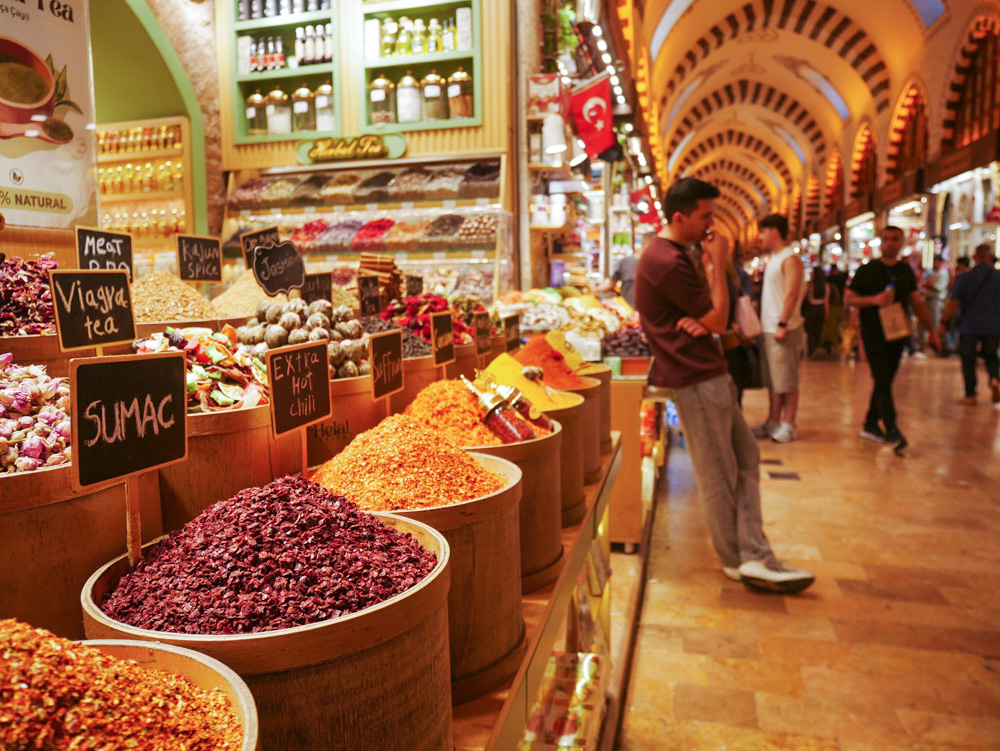
Spices and teas displayed beneath the warm arches of the Spice Bazaar, Istanbul’s centuries-old centre of the spice trade.
Citinotes
chapter 1
A Covered City of Wonders
A visitor to Constantinople must, above all, begin with the bazaars. There, at once, one enters the very heart of this vast city, overwhelmed by its spectacle, its splendour, and its tumult. Each bazaar is a beehive—though here the bees are Persian, Armenian, Egyptian, or Greek. East and West seem to hold a great fair together. Nowhere else can one behold such a throng, such a variety of costumes, or such a profusion of wares of every imaginable kind.
Crossing the bay by boat from Pera, one reaches the street that leads up towards the bazaars of Constantinople. It climbs steadily from beginning to end, narrow and winding.
The ground floors of the houses lining it resemble the wooden stalls of our own markets: the eye plunges directly into the workshops of cobblers and carpenters.
At times, one might imagine oneself passing through kitchens and bakeries, so great is the bustle of preparing and cooking food, amid clouds of steam and aromas rising from the chimneys and hearths of these open-fronted houses. Bread and provisions of every kind are spread out before the passer-by.
We now stand before the Grand Bazaar, from which small, half-covered streets branch away in every direction. One quarter offers a profusion of fresh and preserved fruits and vegetables; another is given over to seafood and fish of the most varied forms and colours. Great strips of sailcloth or old carpets are stretched from shop to shop above the streets, forming a makeshift roof. Underfoot, the roadway is rough and uneven, divided along its centre by a gutter.
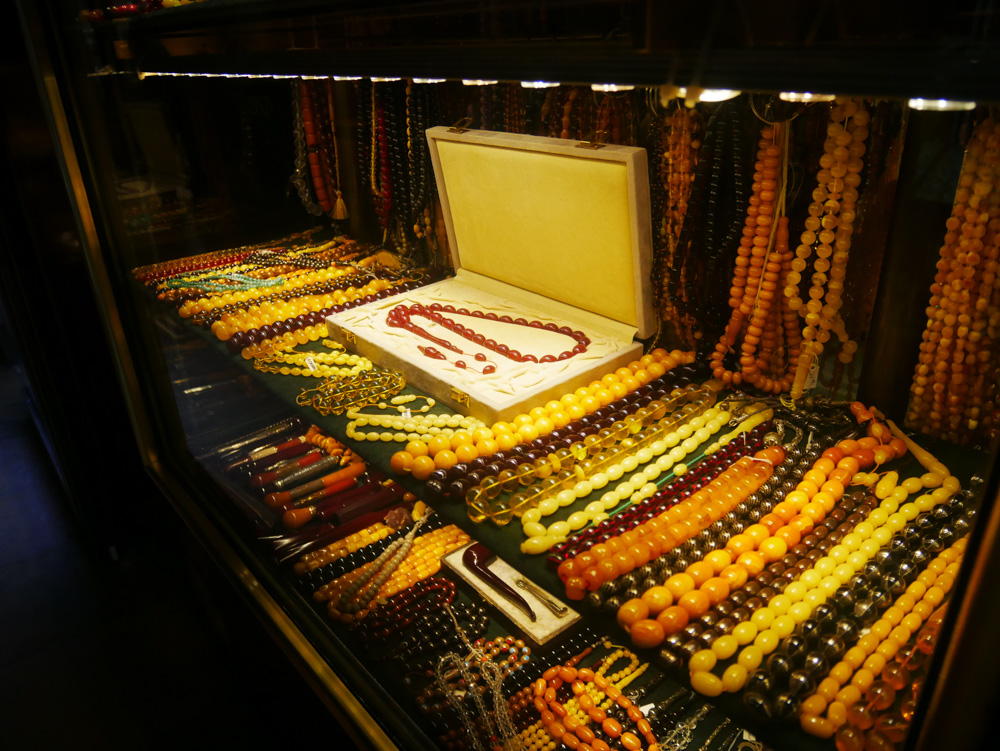
A long gallery, built largely of wooden planks and crowded with hookah stems, hoses, and amber mouthpieces, leads into the bazaar itself, whose massive walls were built to withstand fire.
It is a veritable covered city. Each nation has its own quarter: the Jews have theirs, the Egyptians theirs… Each kind of merchandise has its street, each trade its appointed place: cobblers on one side, saddlers on another… an endless succession.
Every street forms an arcade, painted with flowers and Quranic inscriptions, while shafts of light filter down from the roof. The shops stand side by side like overturned chests; at the back of each, an opening cut into the thick wall reveals the storeroom where goods not displayed are kept.
The Egyptian Quarter—the Misir-Tcharchissi—resembles an immense apothecary’s shop extending over two streets. Spices from India and Arabia, medicinal herbs, and precious pigments mingle their scents into an indefinable perfume. Behind the counter stands a swarthy Egyptian, with the air of some alchemist stepped out of an ancient engraving.
Another arcade recalls the vestibule of some vast armoury. This is the saddlers’ passage: saddles and bridles of Moroccan leather and buffalo hide—from the most refined and intricately stitched pieces to the simplest, almost primitive forms—hang from the walls, lie spread across counters, or rest upon the ground.
Farther on lies the arcade of the jewellers. Gold chains gleam, bracelets sparkle, and rings set with precious stones dazzle the eye. We now enter the realm of the perfumers. The air is heavy with rose oil, musk, incense, and braids of fragrant hemp. In the next arcade, nothing meets the eye but shoes and boots of every shape and colour—slippers shimmering with pearls and magnificent embroidery.
Another passage crosses this one, filled with linens and haberdashery: muslins, handkerchiefs embroidered with great golden flowers, splendid fabrics, and countless other treasures. Beyond it comes another dazzling display: weapons—Damascus blades, daggers, knives, rifles, and pistols—glitter on every side.
It is fascinating to observe the distinctive manner in which each nation reveals itself. The Turk sits motionless, grave and majestic, his long pipe between his lips. The Jew and the Greek hurry to and fro, shouting and winking, while a motley multitude pours through the intersecting aisles: Persians in pointed fur caps, Armenians in black hats shaped like inverted cones, Bulgarians wrapped in sheepskin capes, Jews with tattered shawls draped around their high turbans, elegant Greeks, and veiled women. What a crowd! And through the very midst of it all passes some high-ranking Turk, perched upon his horse, looking neither to the left nor to the right.
As evening falls, at a given signal, sellers and buyers depart. A watchman, charged with guarding the bazaars, locks the entrances and opens them again the following morning at the appointed hour. Merchants return to find their stalls exactly as they left them.
Even during the day, the shops are never truly closed. When a vendor steps away, he merely lowers a net or stretches a few pieces of string across the entrance, for no one here would dare to steal.
Beside the bazaars of Constantinople, the magnificent shops of the Palais-Royal seem no more than a richly dressed grisette beside a daughter of the East, draped in precious fabrics, her hair perfumed with essences of rose and myrrh.
Hans Christian Andersen, A Poet’s bazaar, C. A. Reitzel, 1841
chapter 2
A Beehive of Nations
Not a single district in Constantinople matches the typical idea of a great city. Everywhere one finds the same narrow streets, the same flimsy, highly flammable dwellings, the same dark, winding passageways that intertwine, and the same filth. The bazaars form a vast network—so complex that a stranger cannot follow the many twists and turns without getting lost; to truly grasp their scale, one must traverse them in their entirety, for every type of merchandise has its own designated spot, ranging from rich Persian carpets and silken fabrics from Bursa to the humblest household utensils.
It is a symmetrical showcase of every commercial trade; a city of merchants and artisans set within the city of officials, burghers, and soldiers. Yet, one should not expect to find the elegant shop layouts seen in our own cities. There are no marble storefronts, gilded arabesques, or ostentatious signs here. Each shop lies open to view like a simple stall, and the goods displayed on the counters speak for themselves. One can see almost everything at a glance and make a purchase without even stepping inside.
Eastern merchants do not trouble themselves as much as their Parisian counterparts. In the morning, around eight o’clock, they open their shutters, sit on their counters, and wait patiently for customers while smoking their pipes. At sunset, they close up shop and go home to their families. On Fridays and during Bairam, not a single Turk appears at the shops; Jews close theirs on Saturdays, and Greeks on Sundays.
Turks are distinguished above all by the composure they bring to their business dealings, and by the impassive resignation with which they watch a customer—who had initially stopped by—walk away without spending a penny. “Jueh Allah! God wills it,” they say when they have thus lost a chance for profit, and they calmly go back to smoking their chibouks. They are also reputed to be the most honest. Admittedly, they are in the habit of vastly overpricing their goods, but—aside from this common ruse against which one must be on guard—one can rely with absolute confidence on their integrity.
Xavier Marmier, Du Rhin au Nil, Paris, Arthus Bertrand, 1846
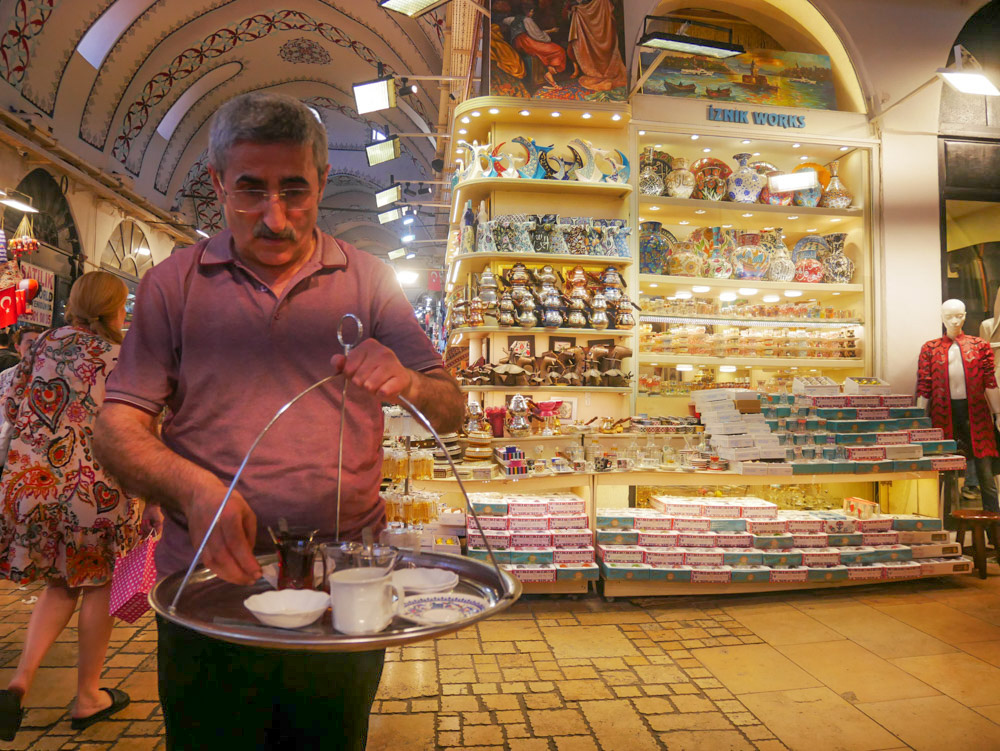
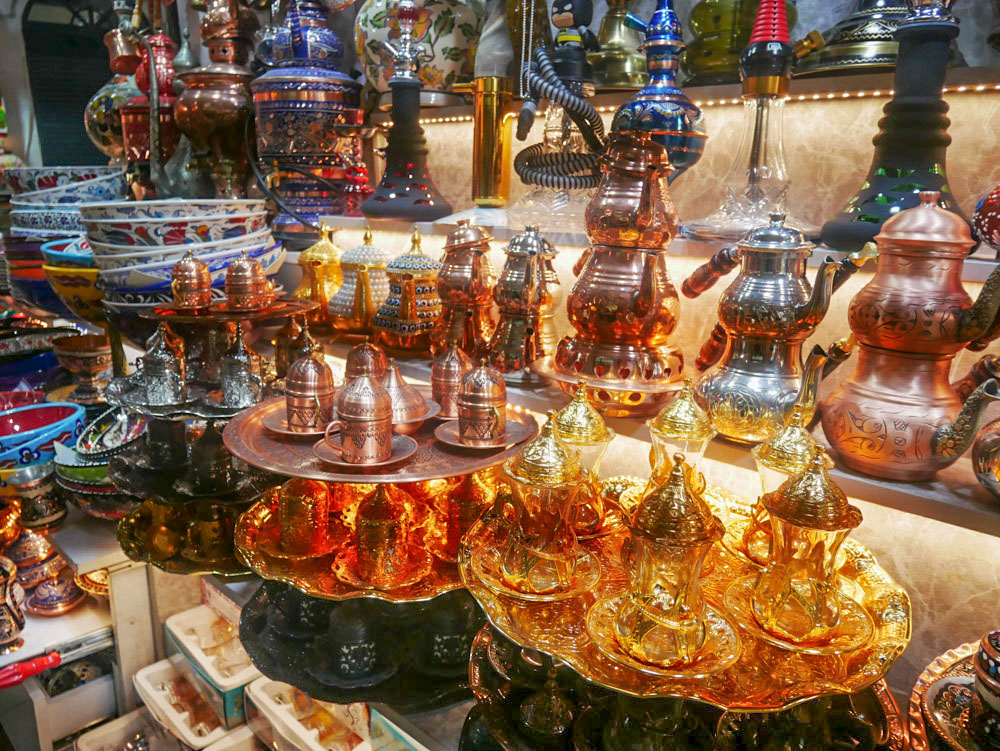
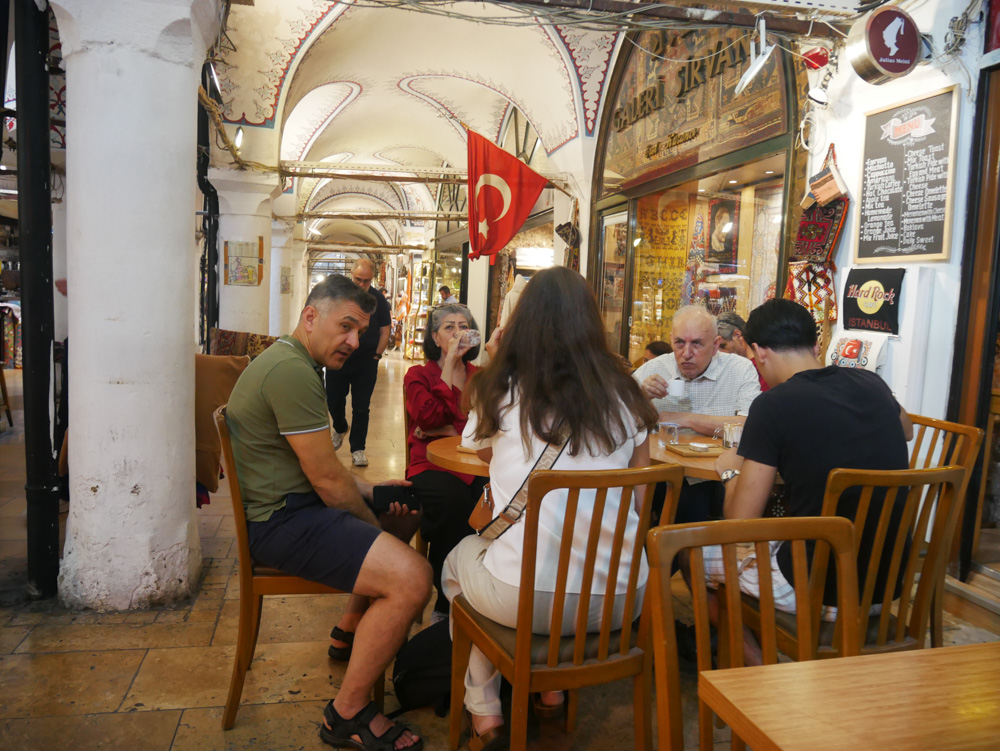
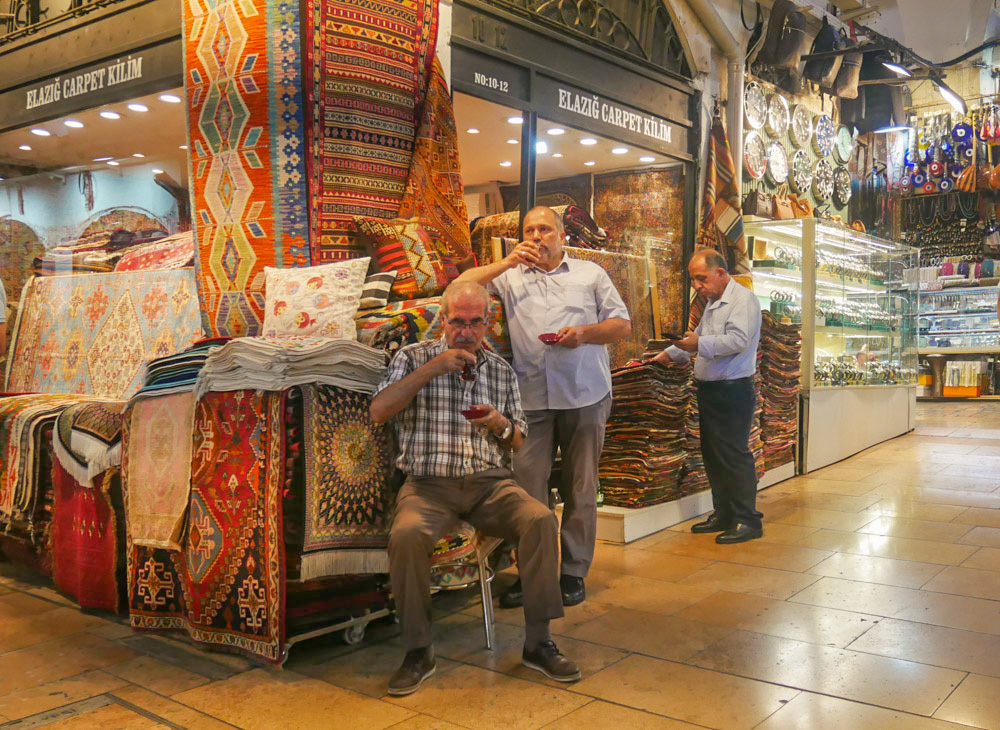
Grand Bazaar merchants pause for Turkish tea or coffee, preserving the age-old mercantile tradition of gathering, talking and doing business over a small cup.
chapter 3
The goose-rancher
The shops here are mere coops, mere boxes, bath-rooms, closets—anything you please to call them—on the first floor. The Turks sit cross-legged in them, and work and trade and smoke long pipes, and smell like—like Turks. That covers the ground.
Crowding the narrow streets in front of them are beggars, who beg forever, yet never collect anything; and wonderful cripples, distorted out of all semblance of humanity, almost; vagabonds driving laden asses; porters carrying dry-goods boxes as large as cottages on their backs; peddlers of grapes, hot corn, pumpkin seeds, and a hundred other things, yelling like fiends.
And sleeping happily, comfortably, serenely, among the hurrying feet, are the famed dogs of Constantinople; drifting noiselessly about are squads of Turkish women, draped from chin to feet in flowing robes, and with snowy veils bound about their heads, that disclose only the eyes and a vague, shadowy notion of their features. […]
And then there was the goose-rancher—a fellow who drove a hundred geese before him about the city, and tried to sell them.
He had a pole ten feet long, with a crook in the end of it, and occasionally a goose would branch out from the flock and make a lively break around the corner, with wings half lifted and neck stretched to its utmost. Did the goose-merchant get excited? No. He took his pole and reached after that goose with unspeakable sang froid—took a hitch round his neck, and “yanked” him back to his place in the flock without an effort. He steered his geese with that stick as easily as another man would steer a yawl.
A few hours afterward we saw him sitting on a stone at a corner, in the midst of the turmoil, sound asleep in the sun, with his geese squatting around him, or dodging out of the way of asses and men. We came by again, within the hour, and he was taking account of stock, to see whether any of his flock had strayed or been stolen. The way he did it was unique. He put the end of his stick within six or eight inches of a stone wall, and made the geese march in single file between it and the wall. He counted them as they went by. There was no dodging that arrangement.
Mark Twain, The Innocents Abroad, American Publishing Company, 1869
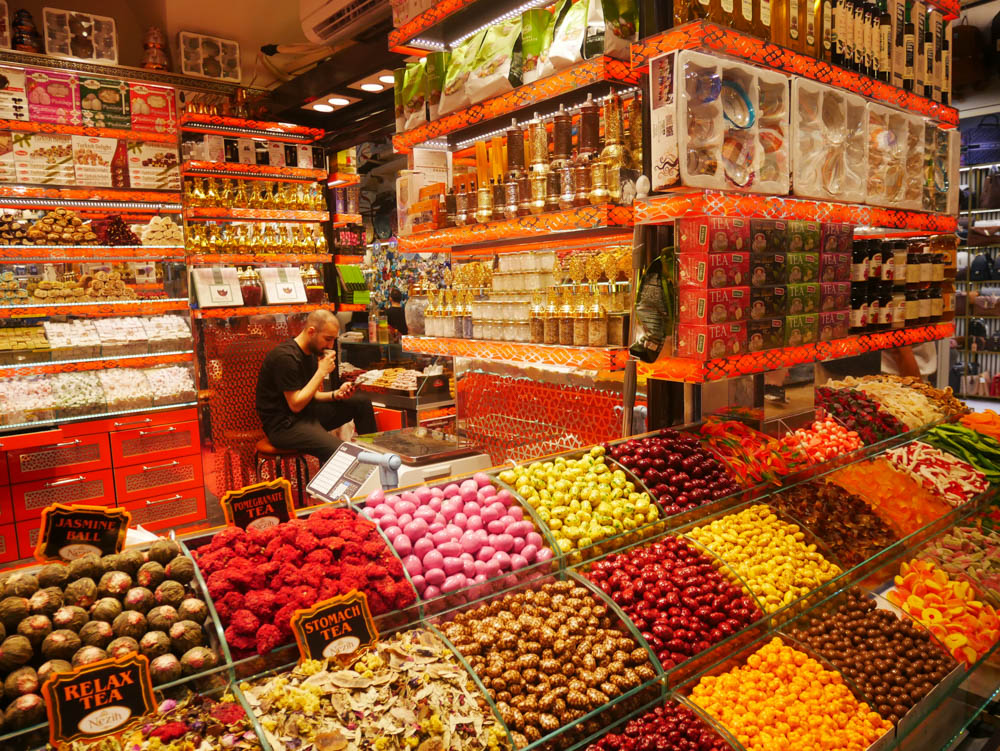
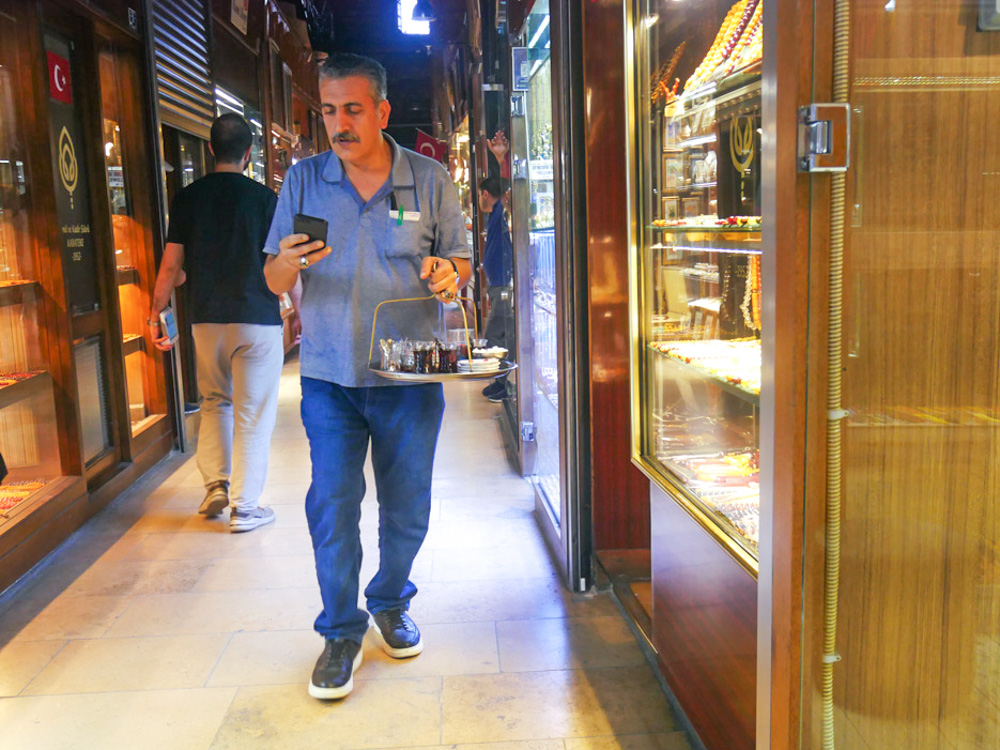
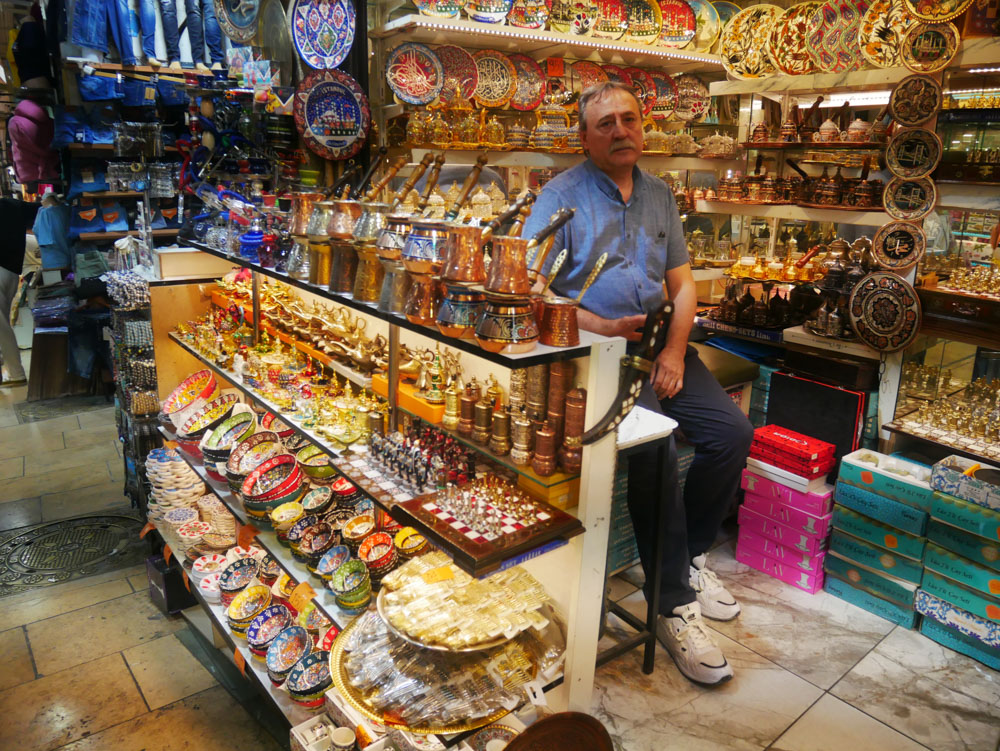
The bustling Grand Bazaar, a vast labyrinth of some 4,000 shops and 61 covered streets, drawing hundreds of thousands of shoppers and visitors on its busiest days.
chapter 4
The scents of anis, tobacco and kebab
A fragile savor comes from the tiny rounded leaves of the basil in a pot on the edge of the café table. Behind on a little platform fenced with red baize, musicians keep up a reiterant humming and twanging out of which a theme in minor climbs and skids in an endless arabesque. There is a kind of lute, a zither, a violin and a woman who sings. In the midst is a stool with coffeecups and a bottle of mastic. The zither is played by a grizzled man with a bottlenose and spectacles who occasionally throws his head back and opens his mouth wide and lets out happily a great Gregorian yodel which the other voices follow and lead back with difficulty into the web of sound.
At the tables packed under the locusttree where they will get shade in the afternoon sit people with narghiles or cigarettes or German pipes or American cigars drinking mastic and beer and coffee and even vodka.
There is a smell of tobacco and charcoal and anis from the mastic and douzico and grilled meat from the skewers of chiche kebab, and a discordance of many hostile languages and a shuffle of feet from the street under the terrace.
John Dos Passos, Orient Express: A Travel Memoir, Harper & Brothers, 1927
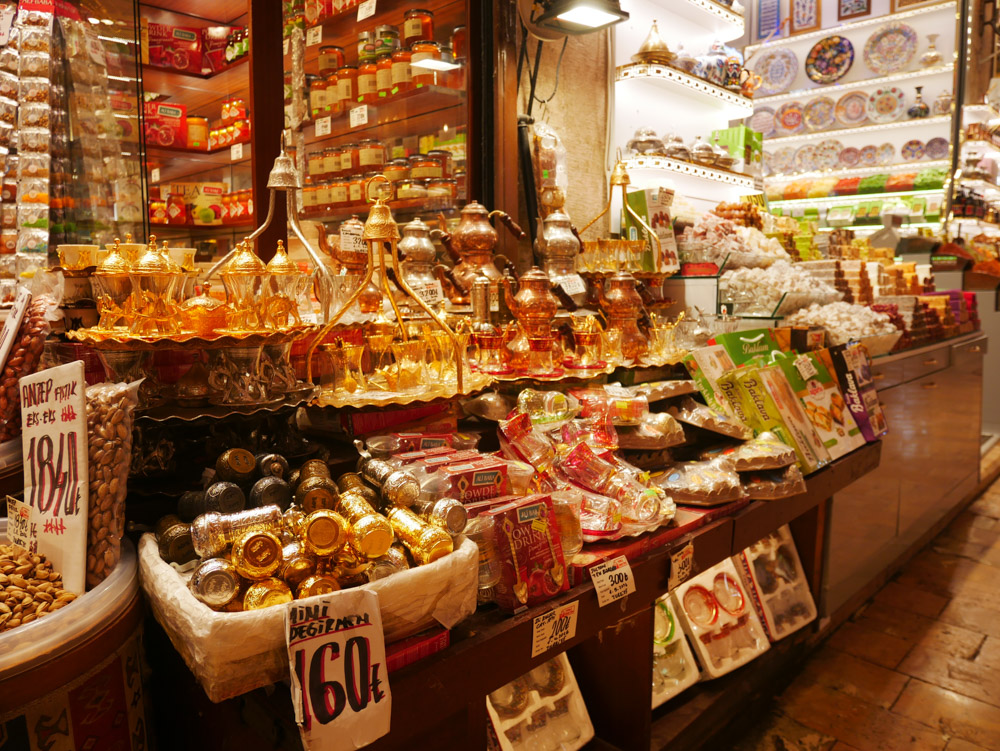
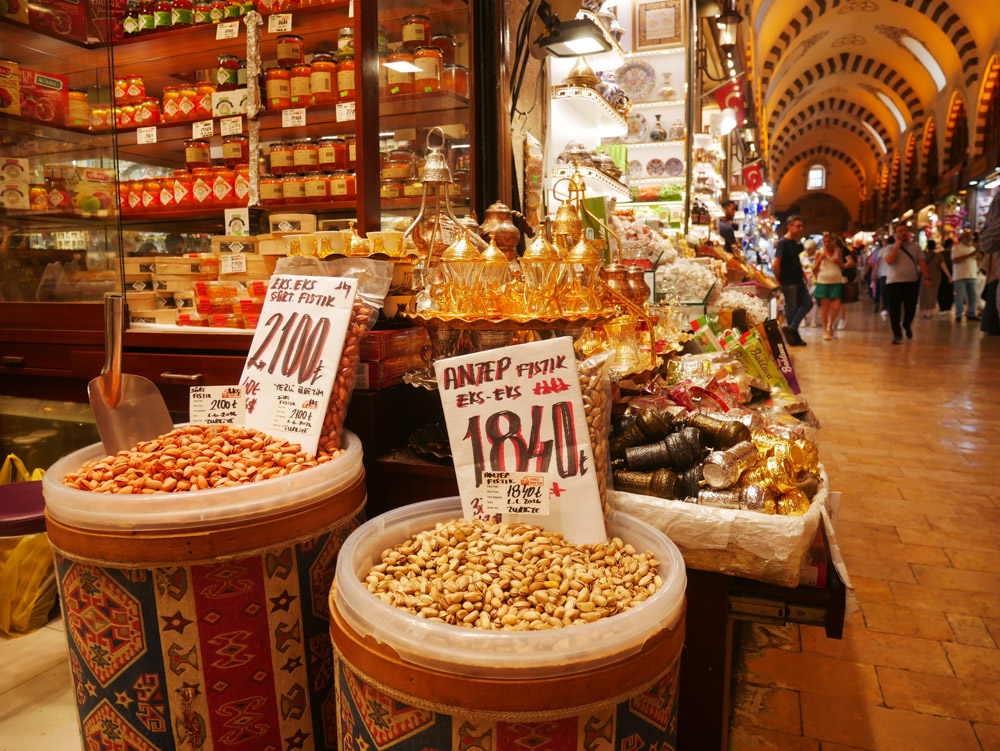
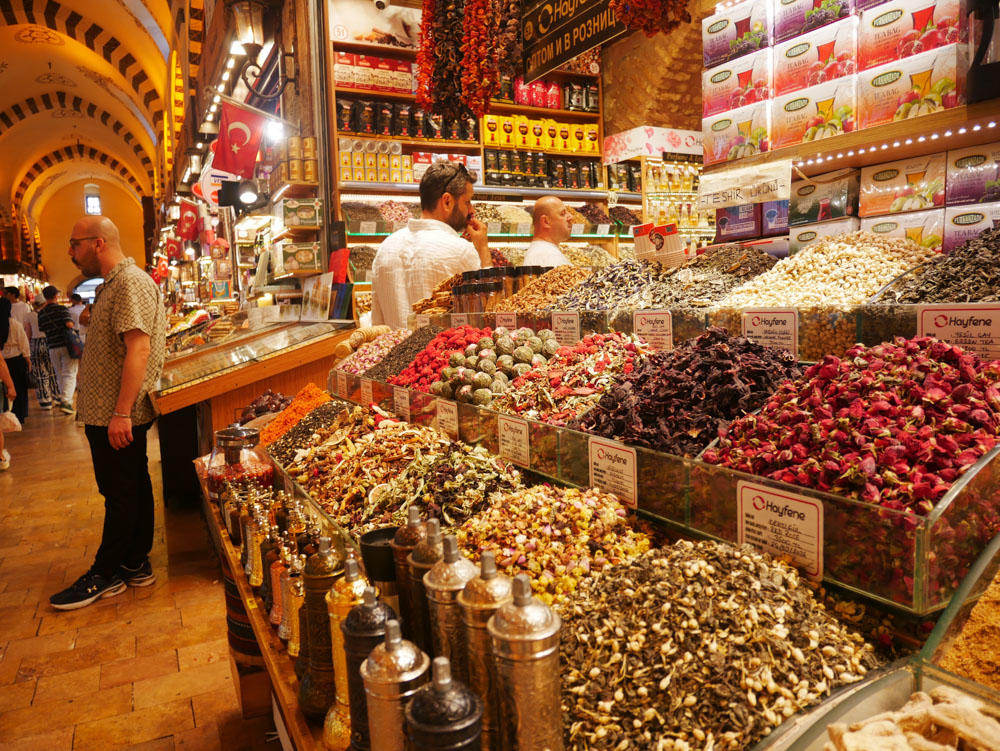
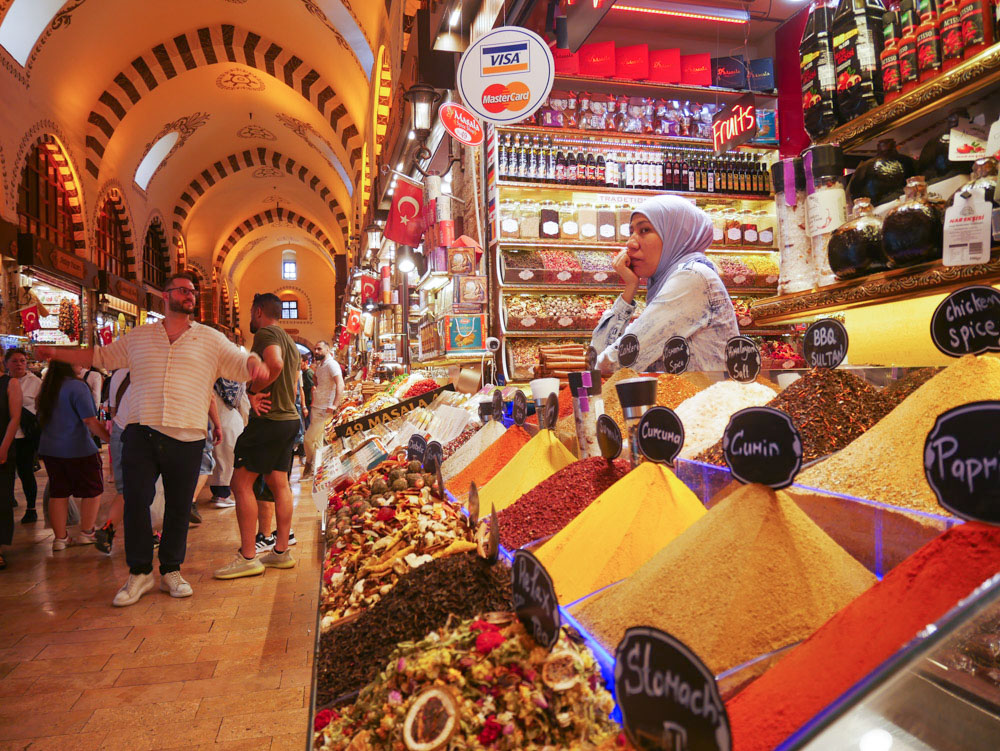
A feast of colour and fragrance in Istanbul’s Spice Bazaar, where pyramids of spices, herbs, teas and dried fruits fill the historic vaulted arcades.
chapter 5
Poems Woven in Wool
We visited several carpet merchants, among them one who lived near the Chav-Lavi Mosque. We climbed a rather steep staircase and were shown into a room hung with ordinary wallpaper and furnished without distinction. The merchant, an Armenian with a hooked nose, offered us armchairs, disappeared for a moment, then returned followed by two men carrying long rolls. They stood them upright in a corner of the room and began unrolling them one by one.
Each roll was a carpet, and so began the reading of the pages of this poem woven in coloured wool. From Asia Minor, Afghanistan, Persia—they came from everywhere, in every size, and almost all were very beautiful.
Some were dazzling, others subdued; some finely woven, others coarse—carpets for palaces, carpets for mosques, carpets for tents, prayer rugs, even rugs for resting upon. Some were bestiaries, others architectural compositions, others gardens, bearing animals, emblems or flowers. Here were delicate carnations, tulips in bloom and cypresses reaching skyward… Some depicted lamps, others fountains; some were traced with inscriptions… Each possessed its own decorative language. Each was a stanza, woven and drawn.
Some had the lushness of a meadow, others the barrenness of desert sands. One after another, before our eyes, they unfolded their language—or their enigma. Some were eloquent, others mysterious. Carpets of conquerors, carpets of sages, carpets of sombre reverie, carpets of exaltation, carpets of ecstasy—we leafed through them one by one.
At times they evoked the wing of a butterfly, at others the mosaic of a stained-glass window. Some seemed asleep; others were strangely alive, resisting us, beckoning to us.
Henri de Régnier, « La lettre qui me présenta à Pierre Loti », Proses datées, Mercure de France, 1925
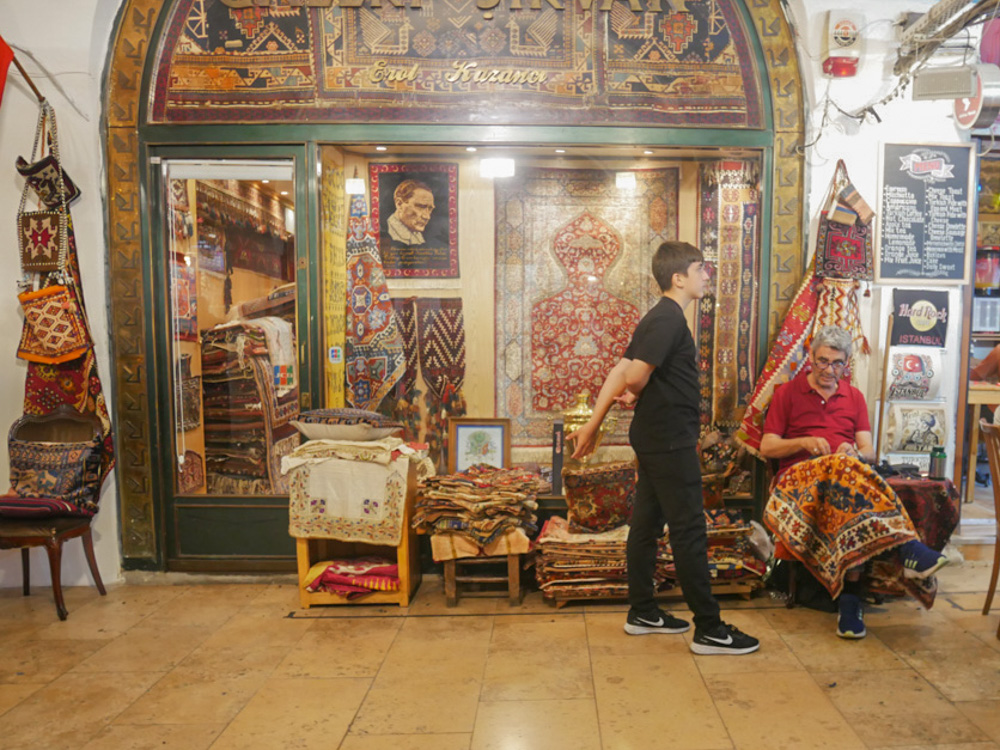
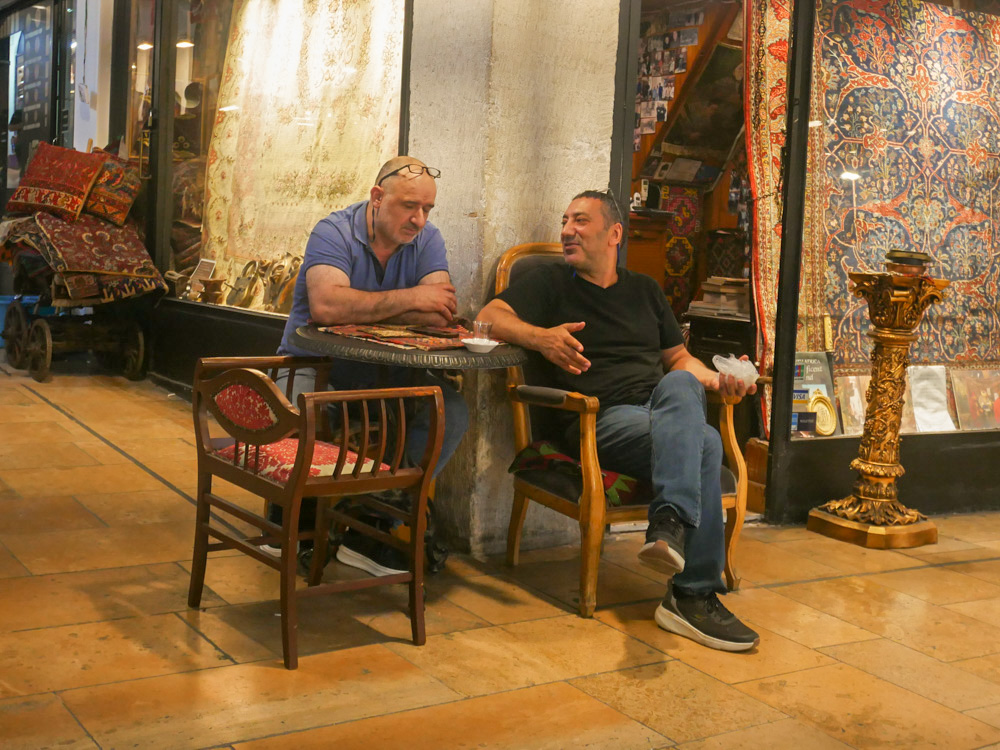
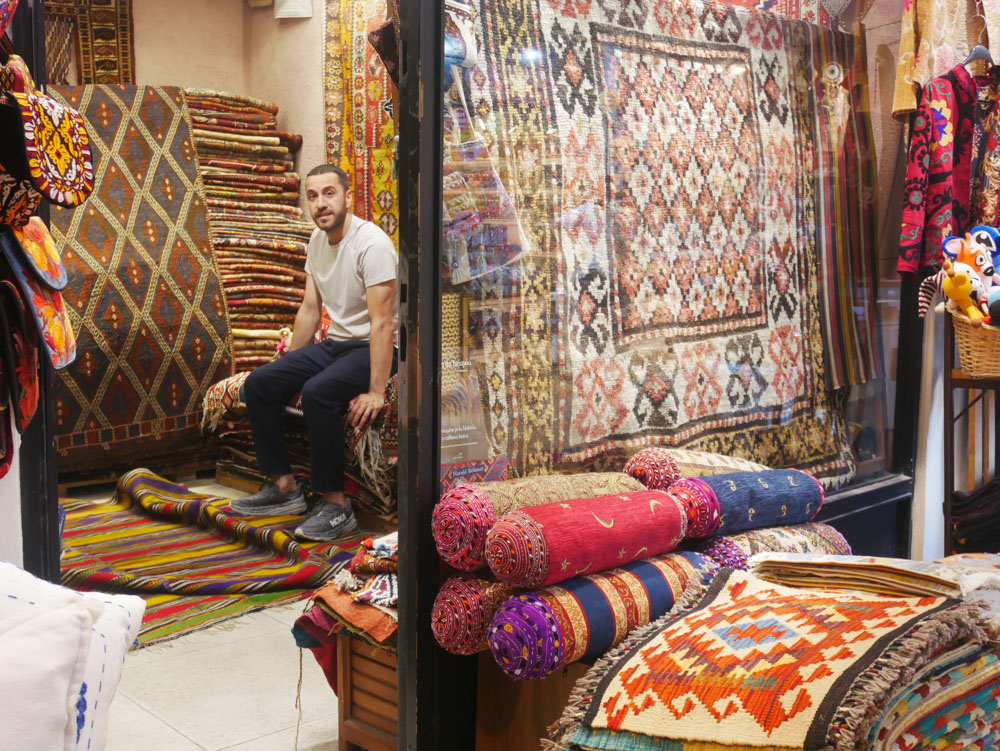
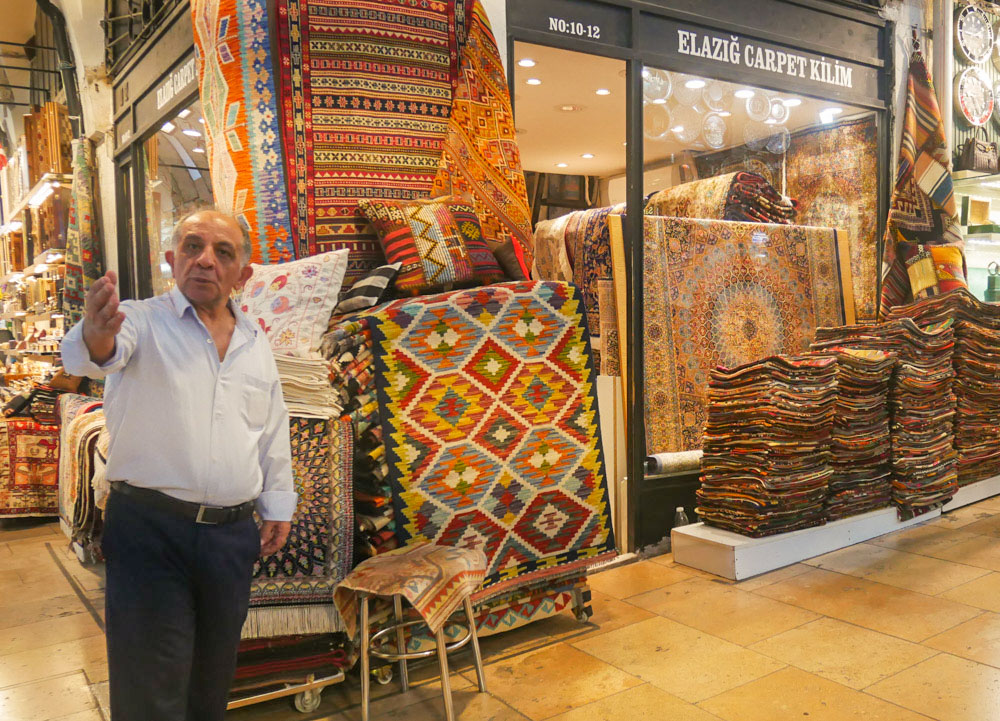
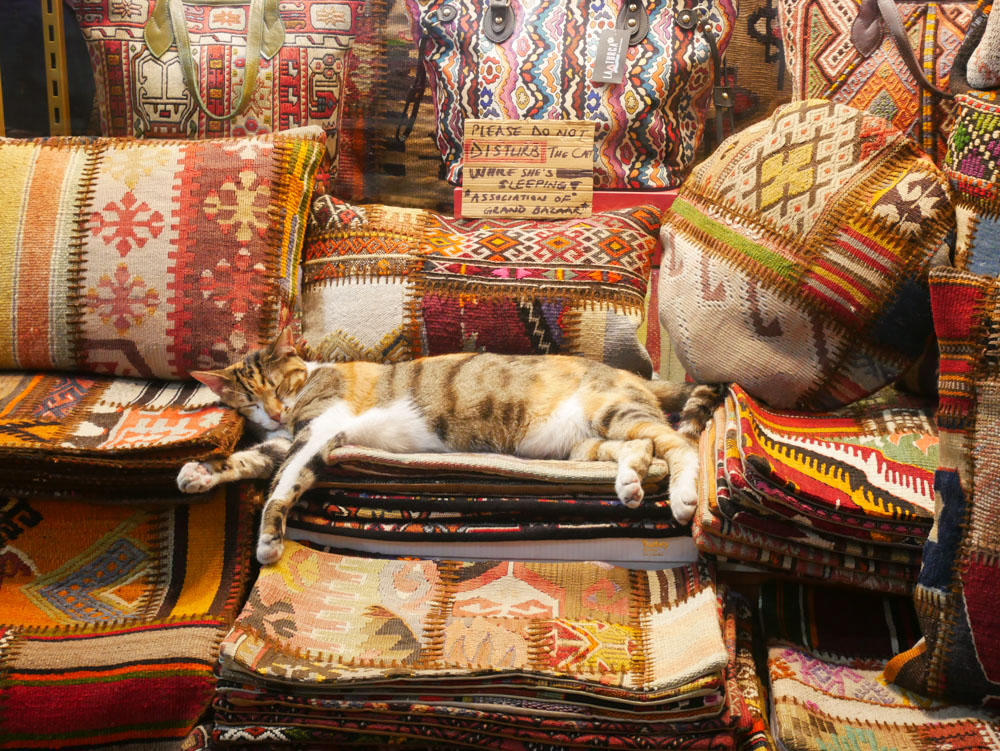
Carpets and kilims spill into the passages of Istanbul’s Grand Bazaar, one of the world’s oldest and largest covered markets and for centuries an important centre of the city’s carpet and textile trade.
Istanbul for Born Bargainers
Explore the best markets in Istanbul and delve into the art of bargaining!